Showing posts with label SF. Show all posts

Tuesday, March 18, 2008

Sir Arthur C. Clarke 1917-2008

"The only way of discovering the limits of the possible is to venture a little way past them into the impossible."

The first real science fiction novel I ever read was Arthur C. Clarke's A Fall of Moondust. I've always been a bit of a "bus-spotter" and a "disaster movie" fan so a novel that basically amounts to a moon bus getting buried was right up my alley. And this Clarke guy wrote pretty good.
Then I read Childhood's End. This Clarke guy wrote like a genius.
Then I saw 2001: A Space Odyssey. This Clarke guy wrote like a god.
It's my guess that Clarke would bristle if he knew he was being compared to a god, but he most assuredly was a giant of the genre. Now one less giant walks among us.
The last of the so-called "Big Three" of Heinlein, Asimov and Clarke, it was the works of Arthur C. Clarke that I was drawn to. Heinlein may have been the best "pure sf" writer of the three, but no-one could match Clarke for a sense of wonder, and as I hit my Golden Age of Science Fiction (12), Clarke was enjoying a surge of popularity and literary acclaim with Imperial Earth, Rendezvous with Rama, and The Fountains of Paradise.
Clarke was one of the last links to the real Golden Age of sf and the elder statesman of our maligned genre. Never one to shy away from the media spotlight, Clarke would often promote science and space exploration any chance he could get.
He is credited with creating the concept of communications satellites in geosynchronous orbits and these orbits are now referred to as Clarke orbits. (He never patented the idea, prompting a 1965 essay that he subtitled, "How I Lost a Billion Dollars in My Spare Time.")
He wrote over 100 books, he was nominated for an Academy Award as co-writer of the screenplay for 2001 and he even appears on-screen twice in the sequel, 2010. He first published story was "Loophole" in 1946; this fall, his latest novel, The Last Theorem -- a collaboration with Frederik Pohl, will be published. He won three Hugos and three Nebulas.

I feel like I just got punched in the gut. They hurt. They all hurt. This one hurts a lot.


"Any sufficiently advanced technology is indistinguishable from Magic."
"The truth, as always, will be far stranger."
"Sometimes I think we're alone in the universe, and sometimes I think we're not. In either case the idea is quite staggering."
"When a distinguished but elderly scientist states that something is possible, he is almost certainly right. When he states that something is impossible, he is very probably wrong. "
"How inappropriate to call this planet Earth, when clearly it is Ocean."
-- Sir Arthur C. Clarke


Monday, December 03, 2007

Episode V: The Empired Mashed Up

There's some fun stuff going on at worth1000.com. It seems they're running a Star Wars photoshop contest: reimagine any Star Wars character as a celebrity.

I kinda like this one - it's subtle....
....although Cheney the Hutt makes a big impression, too. No doubt he's looking for his Jawas of Mass Destruction.
But can anything top this?

Friday, August 03, 2007

Ark II – The Complete Series

On the scorched and polluted Earth of the 25th century, three young scientists and their hyper-intelligent talking chimpanzee roam the land in Ark II, a sophisticated mobile lab and research centre, to help rebuild and restore civilization. Led by Jonah (played by the late Terry Lester), every week he and his crew -- Ruth (Jean Marie Hon), Samuel (Jose Flores) and Adam (Moochie the chimp) – would help villagers and farmers fend off environmental scourges, scavengers, crazy computers or immortal demagogues in a non-violent manner.
It was Saturday mornings, after all.
In fact Ark II was the most expensive live-action Saturday morning kids’ show of its time. Produced by Filmation, it premiered in September 1976, and although only 15 episodes were produced, remained on the air until 1979. It featured some great guest stars – Jonathan Harris, Malachi Throne, Del Munroe, a very young Helen Hunt, Jim Backus and Robbie the Robot (uncredited, alas) – as well as some very cool vehicles.
The premise of each episode was often similar: the Ark crew would be assigned (by a never-seen headquarters) to investigate some strange happening in a village. The villagers would be often fearful of the Ark and its crew, Ruth or Samuel would get into trouble, but then the villagers would realize the error of their ways and everything would turn out okay. But not before Jonah would have to fly around in his jet-pack. (And no wires here, kids – it was a real flying jetpack. Is that cool or what?))
It wasn’t as cheesy as it sounds, although the production values are sometimes lacking (each episode was shot in only three days). Each episode contained a “message,” but viewers were never slammed over the head with it and the show never sank to the level of cliché. They even went out of their way to avoid the obvious cliché – Adam the chimp is never played for comedy relief; he was an equal member of the crew. Even if he was wearing a diaper under his costume.
The show was shot on 16mm film, so it’s never going to look great. That said, the newly remastered DVD release makes the series look pretty good. And for a 30 year-old series that only filmed 15 episodes, there’s a wealth of behind-the-scenes material: two episode commentaries, a new “making of” documentary, plus assorted photo and art galleries. But wait – there’s more! Also included is DVD-Rom material, including all the shooting scripts, plus the series bible.
Many of the Filmation live-action Saturday morning shows are due to be released on DVD in 2007.
Can a review of Jason of Star Command be far behind?

Monday, June 18, 2007

You're a Geek

You're a geek.
You know you're a geek.
But just how big a geek are you?
Click here to find out.

Sunday, May 27, 2007

Continuing the Star Wars Celebration....


Was life ever worth living before YouTube?

Friday, May 25, 2007

Wanna Feel Old?

30 years ago today... in a galaxy far, far away... Star Wars premiered...


From the BBC comes this very funny article:
"BBC News entertainment reporter Kevin Young's sole exposure to science-fiction to date consists of lusting after Gillian Anderson in The X-Files for a while in the 1990s. Despite fearing it was two hours of his life he'd "never get back", he offered to lose his Star Wars virginity."

Sunday, May 20, 2007

Crisis on Infinite Earths

Crisis on Infinite Earths
by Marv Wolfman

review by John W. Herbert

Novelizations generally come out at the same time as the movie/tv show/event that they are tied in to. There seems little point for a novel plugging a 20 year-old comic series to come out now (unless its publication was coinciding with the publication of the sequel to the original comic series. Maybe there is a method to this marketing madness after all).
To begin, originally there were the original DC heroes of the 1930s and 1940s Golden Age: Superman, Batman, Wonder Woman, The Flash, Green Lantern et al. But after the war, many comics were cancelled and some heroes disappeared for a while. Batman and Superman continued, but The Flash, Green Lantern and others dropped by the wayside.
But in the 1950s and 1960s, DC began introducing updated versions of these forgotten heroes. The “old” Green Lantern, Alan Scott, was a railroad engineer who came upon a lantern forged from a mysterious metal that gave him super-powers, while the “new” Green Lantern, Hal Jordan, was chosen to join an intergalactic police force and given a ring that allowed him to give form to whatever he willed. The original Flash, Jay Garrick, was a college student who inhaled “hard water vapours” and gained super-speed, while the modern Flash was Barry Allen, a police scientist who suffered an accident with chemicals and was imbued with super-speed.
As the new so-called Silver Age heroes grew in popularity, the natural idea occurred – what if the new Flash met the old Flash? To accomplish this, the writers at DC used the old parallel worlds idea: the current Flash, and his contemporaries, lived on Earth-1, while the previous Flash and his contemporaries lived on Earth-2.
The Flash crossover proved so popular that soon the Green Lanterns crossed over, followed by whole leagues of heroes in annual crossover events. DC began adding more parallel worlds to their canon. There was Earth-3 where the heroes were the bad guys and the super-villains were the heroes. There was Earth-S where Captain Marvel and the Marvel Family lived. There was even Earth-Prime where the DC Comics writers lived and wrote the stories that played out across what was now referred to as the DC Multiverse.
By the mid-1980s, the powers-that-be decided that the DC Multiverse had grown so huge and unwieldy that new readers would be lost learning the previous continuity, and decided to do what is now called a re-boot of the DC Multiverse and collapse it into a single universe that would be easy for writers, editors and new readers to keep track of.
Enter Marv Wolfman and George Pérez who respectively wrote and drew Crisis on Infinite Earths, an award-winning 12-issue mini-series that tore the DC Multiverse asunder and rearranged it into a single, cohesive universe. Sort of. And in 2006, as DC prepared another massive crossover event, Infinite Crisis, to repair the continuity ruptures of the previous 20 years, iBooks published Wolfman’s novelization of the original series.
Wolfman wastes no time getting into the story, told through the eyes of The Flash, Barry Allen. It’s an interesting choice to use Allen as the narrator – the Silver Age Flash was considered by many readers to be a dull and boring character, and it’s for this reason that he was [Spoiler Alert] killed off at the end of the original Crisis mini-series. [He continues to be unappealing to modern fans as the beautiful Alex Ross-painted cover of the novel shows Supergirl’s death, not The Flash’s. And don’t ask me about Supergirl’s screwed up continuity. Oy vey. End of Spoiler Alert.]
Barry has become “unstuck” in time and his incorporeal form bears witness to multiple plot threads, presented in a non-linear manner. As a plot device, it’s a smart way for Wolfman to juggle his numerous stories as the various universes are destroyed by a being known as the Anti-Monitor, who, like most super-villains, can only come up with schemes that require the destruction of All Existence in order to succeed. (Whatever happened to knocking off the corner liquor store? But I digress.) It does make for confusing reading at first, as Barry is just as lost as the reader is, but soon Barry is up to speed with the story and so are we.
There’s no point trying to explain the particulars of the story, and it flies by so fast that who really cares anyway? And the legion of super-heroes (pun intended) that are briefly mentioned must be in the hundreds. Most rate merely a line or two. That said, Wolfman does manage to capture the essence of many of these one-line characters, and he finely draws the personalities of the main players of Batman, Superman and Wonder Woman. He does an especially fine job with Barry, our narrator, and captures the heroism and the tragedy in this doomed character.
If you really want to read this story, find the original comic. It’s readily available in graphic novel form. But if you’re looking for a few hours to kill with some light reading about the end of everything, this will do the trick, too.

originally published in Neo-Opsis magazine, 2007.

Tuesday, May 08, 2007

Trust Me, This is Funny

I really can't explain this.... you have to experience it for yourself.
Trek. Cats. Mangled English. Nothing more needs to be said.
Just click here.

Tuesday, April 10, 2007

Superthunderstingcars Are Go!

Karl found this! It's awesome! Peter Cook and Dudley Moore in their glory years!

Monday, April 02, 2007

Favourite SF Films

SFX Magazine had a poll on the best SF films of all time. The winner: Serenity.
The top ten:
1. Serenity
2. Star Wars
3. Blade Runner
4. Planet of the Apes
5. The Matrix
6. Alien
7. Forbidden Planet
8. 2001: A Space Odyssey
9. The Terminator
10. Back to the Future

Saturday, March 31, 2007

Monday, February 05, 2007

Battlestar Galacticons

Here's a great article on Neocons who use sci-fi and fantasy analogies, and how many of them are upset at the third season of Battlestar Galactica which depicts many of the Galactica crew as insurgents against a Cylon occupying force even going so far as to use suicide bombers against the first graduating class of human security forces police recruited by the Cylons:

National Review’s Jonah Goldberg, who writes regularly about Galactica’s politics on NRO’s group blog, The Corner, also picked up on parallels between the show and the war on terror. Goldberg took particular glee in attacking Galactica’s anti-war movement, which he said consisted of “radical peaceniks” and “peace-terrorists” who “are clearly a collection of whack jobs, fifth columnists and idiots.” Goldberg also praised several characters for trying to rig a presidential election. “I liked that the good guys wanted to steal the election and, it turns out, they were right to want to,” wrote Goldberg. Stolen elections, evil robots, crazed hippies … what more could a socially inept right-winger want from a show?
But alas, this love affair between Galactica and the right was not to last: in its third season, the show has morphed into a stinging allegorical critique of America’s three-year occupation of Iraq. The trouble started at the end of the second season, when humanity briefly escaped the Cylons and settled down on the tiny planet of New Caprica. The Cylons soon returned and quickly conquered the defenseless humans. But instead of slaughtering everyone, the Cylons decided to take a more enlightened path by “benevolently occupying” the planet and imposing their preferred way of life by gunpoint. The humans were predictably not enthused about their allegedly altruistic rulers, and they immediately launched an insurgency against them using improvised explosive devices and suicide bombers. Needless to say, this did not go over very well in the Galacticon camp.
“The whole suicide bombing thing … made comparisons to Iraq incredibly ham-fisted,” wrote a frustrated Goldberg, who had hoped the struggle against the Cylons would look more like Le Resistance than the Iraqi insurgency. “The French resistance vibe … is part of what makes the Iraq comparison so offensive. It’s a one-step remove from comparing the Iraqi insurgency to the (romanticized) French resistance.”


The article goes on to mention further sci-fi allusions, including a writer who thought that:
“[i]t’s time to institute Disintegration Chambers in our major American cities,” he said, referring to a Star Trek episode that featured two tribes who preferred to fight wars by disintegrating their own people rather than sending them into live combat. Even though the episode was actually an allegory about the perverse methods governments use to shield their people from the brutal costs of war, he took quite a fancy to the idea of forced disintegration, especially for his ideological foes.
“Here’s the deal,” he wrote. “We decide what constitutes torture, and identify it as the following: insufficient air conditioning, excess air conditioning, sleep deprivation, being chained to the floor, and other forms of psychological stress … Those who disagree with these techniques must sign a record that registers their complaints. When a terrorist finally spills the details on a forthcoming attack on, say, Chicago, the people who signed the register and live in Chicago are required to report to the disintegration chamber.”

Sunday, October 08, 2006

V-Con 31

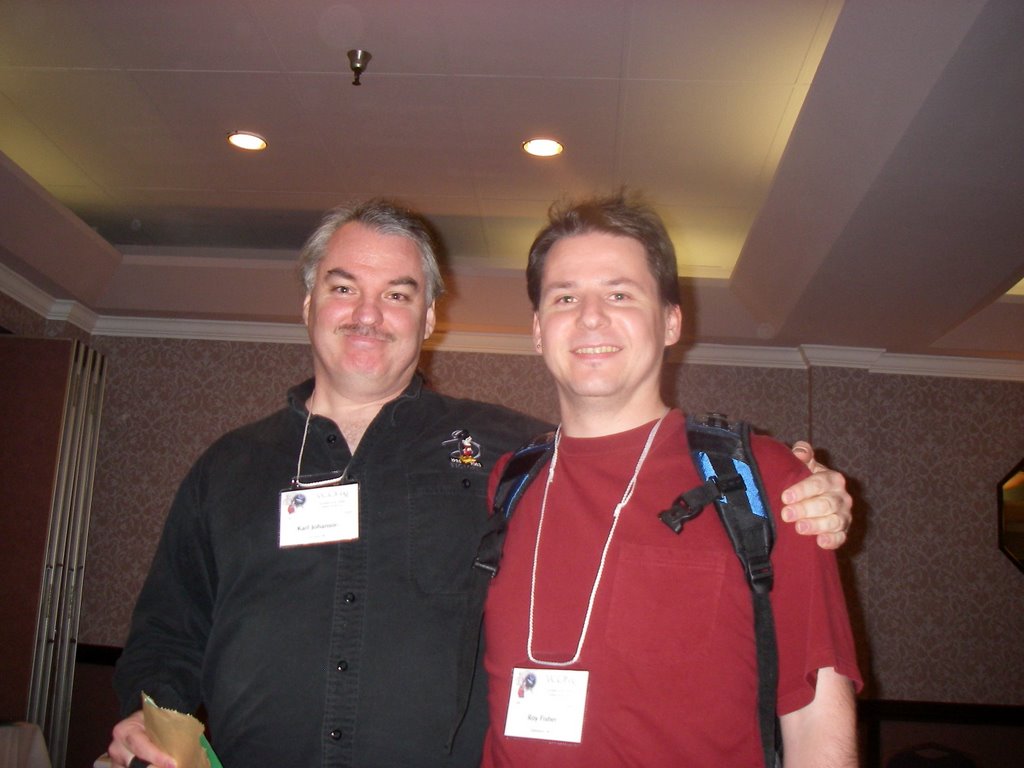
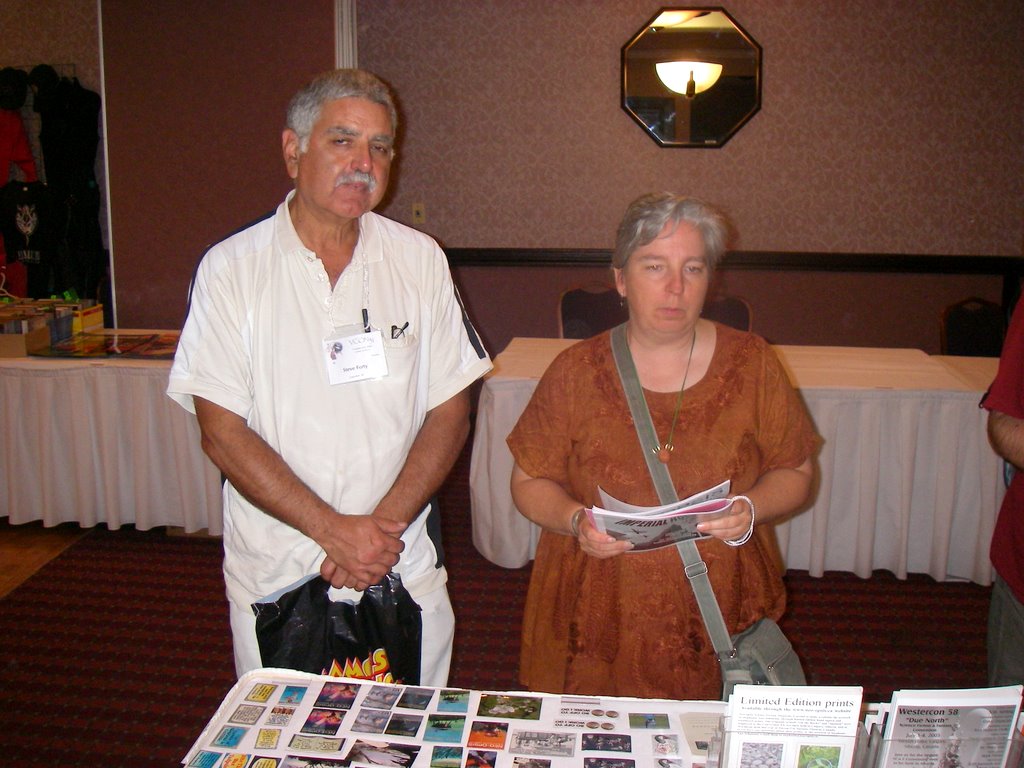
Spent the weekend at V-Con 31 in Vancouver, where a fine time was had by all. Here Stephanie mans the Neo-Opsis table.

Karl says Hi to Roy, while Roy gooses him. (I'm kidding!)

Steve and Paula look very pleased to be in the same picture.

What does one do at a V-Con? Go to the mall for ice cream, of course! Roy chows down...

...as does Louise...

... and me, of course.

Finally, never fall asleep when I have my camera and an empty Pop-Tart box handy.

Friday, September 08, 2006

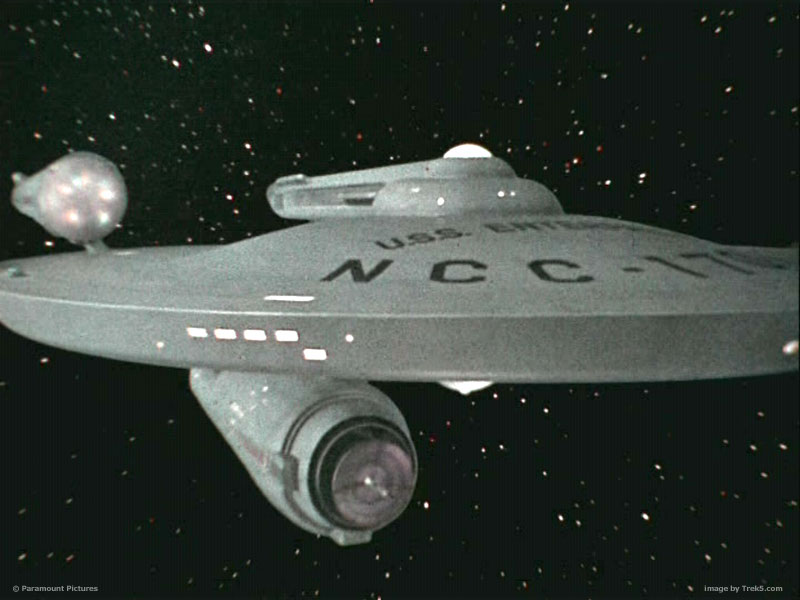
Still Trekkin' at 40

Star Trek premiered 40 years ago on NBC in the US (and 40 years ago yesterday on CTV in Canada... proving once again that Canada is ahead of the curve... but I digress...)


Thursday, July 27, 2006

BloodRayne

It’s not often that a film will come along that is so bad not even I will like it. BloodRayne is one such film.
The plot is derivative, as is most of this movie. Kristianna Loken stars as Rayne, a Damphir, part human-part vampire. She is being pursued by a vampire overlord (played by Ben Kingsley, who must be paying off a lost bet by being in this), and some human vampire hunters led by Michael Madsen. Along the way, she learns secrets about her past, gains special powers, confronts her father blah blah blah yadda yadda yadda.
This film looks like it had a budget equivalent my allowance when I was eleven. The vampire make-up looks like Buffy leftovers. This film is filled with bloody violence that is about as realistic and comical as the Black Knight scene from Monty Python and the Holy Grail. Oh, wait – BloodRayne isn’t a comedy!
Madsen is horribly miscast in this, but so is everyone else, too. Loken has some screen presence, but nothing can save her in this mess, and no-one else brings anything to their parts. Except for Meatloaf, who, in his only brief scene, deliriously chews on the scenery and swallows it whole. (He clearly is the only person who realizes what a piece of frommage he’s in – he’s billed in this film as “Meatloaf Aday.”)
Avoid this film at all costs.
Please.

Monday, January 23, 2006

Tuesday, January 17, 2006

Election Watch '06: Highly Illogical

Not that I have any burning desire to continue to poke fun at Stephen Harper, but what the heck.
A canada.com story points out that apparently Harper is a huge Trekkie (scroll down to the second half of the article).
"Like, huge," says a source. "And it has to be the classic series, from the 1960s - none of that Next Generation, Deep Space Nine crap." Okay, I'll give Harper a point for being a fan of "real" Trek.
How true this really is I don't know, but it readily sets up the tried and true "let's compare the candidates to Star Trek characters" joke.
Paul Martin is Scotty. Clearly, he's always whining about needing more power, but he's also trying his damnedest to keep his wee bairns flying. Unfortunately for him, it seems that the good ship Liberalprise is on it's last legs, no thanks to the evil Klingon, Commander K'Gomery.
Jack Layton is McCoy. He has a cure for everything that ails you, and most of them are just good old fashioned horse sense. He's always muttering that the rest of the crew don't follow his advice. He is always speaking the truth from the heart, and as always, no one listens.
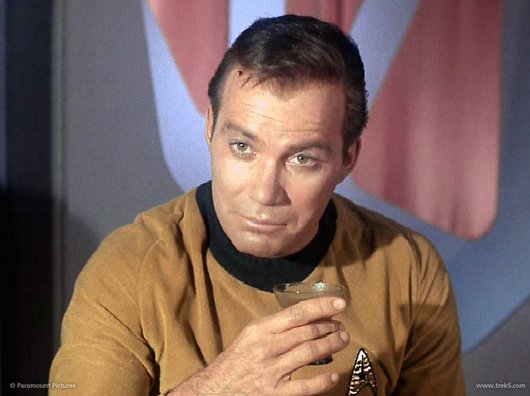
Gilles Duceppe is Captain Kirk. Which makes sense in a way as Duceppe wants to fly his ship his way, damn Starfleet and its blasted regulations. He's not going to listen to some blasted bureaucrats from across the galaxy tell him what to do. He's going to take his ship and fly on a seperate course.
Finally, Harper is unemotional, his smile is forced, and he speaks in a monotone. His logic often fails him at critical plot points. Obviously, he is Spock. He even has the same haircut.

Monday, January 09, 2006

King Kong (2005)

It's a familiar story: boy meets girl, boys casts girl in movie, girl meets other boy, girl and other boy fall in love, girl meets giant ape on Skull Island, ape falls for girl, boy captures ape, ape becomes a star on Broadway, ape destroys Broadway.
Peter Jackson's loving remake of 1933's King Kong is not a perfect film, but it comes very close. And slightly over three hours, it runs a little long. 20 minutes could have very easily come out of the Skull Island sequence. But that's a minor quibble, and if I'm going to be forced to sit through an extra 20 minutes of a giant gorilla battling giant T-Rexes, that's a sacrifice I'm willing to make.
The film starts in New York as out of work actress Ann Darrow (Naomi Watts) has a chance encounter with shady film-maker Carl Denham (Jack Black). Carl convinces Ann to join his crew and himself on a sea voyage to make a film on location on a south seas island. Denham also practically kidnaps his writer, Jack Driscoll (Adrien Brody). What Denham hasn't revealed is that the island is uncharted, and an ancient heretofore unknown society on the island worships a large and dangerous being named Kong.
Jackson's remake follows the original's plot nearly note for note, but he manages to provide a few narrative deviations along the way. It's full of nods to the original, from Denham discovering that an actress named Fay is unavailable for his picture because she's shooting one for Merian Cooper at RKO (that would Fay Wray making the original Kong), to Peter Jackson's cameo as one of the pilots that kills Kong (original Kong directors Cooper and Ernest B. Schoedsack also did the same).
The film looks gorgeous. Just gorgeous. From a beautifully recreated depression-era New York to the lush jungles of Skull Island, the sets and production design are sumptuous and amazing.
The cast is mostly top notch, although occasional I thought that Jack Black seemed a little out of his depth, particularly his reading on the film's famous final line. But again, another minor quibble. Black holds his own for the most part.
And Kong himself is a wonder. With Andy Serkis (Gollum of Lords of the Ring fame) doing the motion capture work, there seems to be no limit to the range of emotion that can play across the big ape's face. And of course, it's Kong that propels this picture, from the battles with dinosaurs to his emotional attachment to Ann, his sorrow at losing her and being captured, and his all too brief joy at finding her again. If the audience cannot feel for Kong, this film is lost, but by the end we are firmly in Kong's camp, and our heart's break during the final battle atop the Empire State Building.
Grab your popcorn and a large pop, plan your bathroom breaks accordingly, and see this movie on a big screen. A larger than life movie legend deserves to be seen on a large screen.